Modernize without forcing the whole estate to move at once.
Zoiko Tech helps organizations connect legacy systems, APIs, workflows and digital services through shared integration and control patterns — so modernization can happen in deliberate stages with clearer ownership, observability, validation and operational continuity.
What change do you need?
Choose the closest intent and jump to the matching pattern.
Connect legacy systems
Create governed interfaces around systems that must remain.
Modernize workflows
Move manual or brittle workflows onto more consistent digital patterns.
Expose capabilities through APIs
Turn hard-to-access functions into reusable interfaces.
Retire technical debt
Decommission only after dependencies, data and replacement behavior are verified.
Why modernization fails
Legacy replacement is rarely one migration, and disconnected point integrations add long-term operating cost. These are the seven places it usually breaks.

Hidden dependencies
Application lists aren't enough. Relationships, interfaces, users, data and downstream jobs must be mapped.

Big-bang replacement
Contrast with staged coexistence and migration waves.

Point-to-point sprawl
Ad hoc integrations multiply operational and change cost.

Unclear data ownership
System of record and synchronization decisions must be explicit.
Estate discovery and dependency map
Before any modernization choice, know what exists, who depends on it and what it touches.
| Discovery object | Required fields / questions |
|---|---|
| System / service | Name, purpose, owner, operator, lifecycle state, criticality. |
| Users / roles | Who depends on it; internal or external; access model. |
| Interfaces | Inbound / outbound APIs, files, queues, events, webhooks or manual handoffs. |
| Data | Authoritative records, sensitivity, retention, jurisdiction, synchronization. |
| Dependencies | Upstream / downstream applications, jobs, processes and external parties. |
| Operational profile | Availability needs, batch windows, peak periods, incident and support path. |
| Change constraints | Blackout periods, regulatory deadlines, contractual and vendor constraints. |
| Evidence | Architecture docs, interface contracts, logs, usage evidence, owner validation. |
System drawer
Purpose, owner, dependencies, interfaces, data, risk and change notes.
Risk rail
Single points of failure, unsupported interfaces, unknown owners, duplicate capability, stale documentation.
Actions
Mark target state, assign owner, add dependency, attach evidence, flag unknown, export review.
Six modernization patterns
Different situations call for different moves. The right answer is often not migration.
| Pattern | When it fits | What it involves |
|---|---|---|
| Coexist | A critical system must remain while new capabilities are introduced around it. | Wrap with controlled interfaces, identity and observability; define the boundary and source of truth. |
| Integrate | Systems remain but need reliable exchange or orchestration. | APIs, events, webhooks, identity and reference patterns. |
| Modernize in place | A workflow or component can improve without full replacement. | Replace brittle steps, add interfaces and controls, preserve proven core behavior. |
| Migrate | A bounded workload can move to a new service or platform. | Wave plan, data mapping, validation, cutover, rollback and hypercare. |
| Consolidate | Multiple tools duplicate capability or control layers. | Rationalize features, users, data, interfaces and contracts before decommission. |
| Decommission | A system can be retired after replacement and dependency closure. | Archive or retain required data, close interfaces, revoke access, update routing, preserve evidence. |
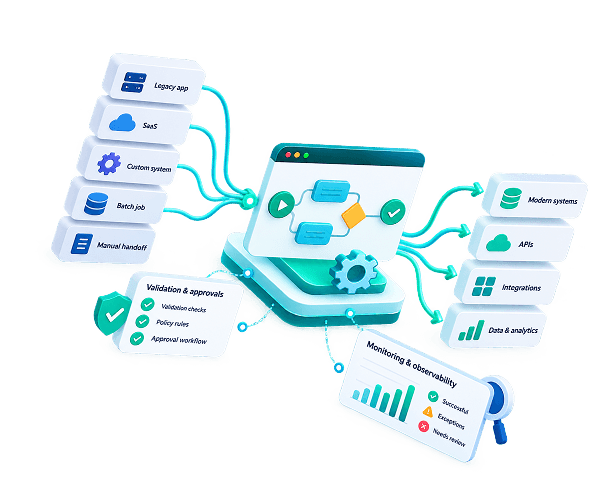
Target integration architecture
Integration as an operating architecture, not a connector list. Read from the bottom layer up.
Governance
Security, privacy, compliance, lifecycle, change and evidence.
Observability
Logs, events, health, tracing / telemetry where supported, audit evidence.
Workflow / orchestration
Routing, task state, approvals, retries, exception handling.
Data & state
System of record, synchronization, mapping, transformations, provenance.
Identity & authority
Authentication, delegated access, service identity, roles and policy.
Interface layer
APIs, SDKs, webhooks, events, adapters / connectors where approved.
Experience / workflow
Users, channels, applications, operational workflows.
Data and system-of-record strategy
Duplicated data can undermine modernization. Every phase needs a clear answer on what is authoritative.
Authoritative source
Every material data object has a source of truth in each phase.
Synchronization
Direction, cadence or trigger, ownership, failure handling and reconciliation.
Duplication
Temporary duplicate stores need a purpose, retention window and closure criteria.
Mapping
Identifiers, field mapping, transformations and validation.
Provenance
Where critical data originated and how it changed, where evidence matters.
Sensitive data
Minimize movement and access; apply jurisdiction and privacy controls.
Historical data
What must migrate, be archived, or stay in the legacy system.
Cutover state
Freeze, sync, delta and final validation behavior where relevant.
| Object | Source of truth | Mapping | Reconciliation | Owner |
|---|---|---|---|---|
| Customer record | Legacy system (phase 1) | Identifier + 12 fields | Matched | Data owner A |
| Order history | Archive | Read-only | Review | Data owner B |
| Account balance | Pending decision | Not mapped | Mismatch • Blocks cutover | Data owner C |
Workflow modernization
Work keeps moving without losing accountability. Some steps stay, some are wrapped, some are replaced and some are retired.
Trigger
Human action, schedule, event, system state or external request.
Current path
Existing steps, handoffs, systems, approvals and pain points.
Target path
New digital steps, reused interfaces, approvals and evidence.
Exception path
Incomplete input, policy blocks, integration failure or review needed.
Ownership
Named business owner, technical owner and support role.
Evidence & measurement
Key actions and outcomes recorded. Only approved measures, no invented productivity claims.
Migration waves and cutover
Move in bounded waves with an explicit gate at each step.
Scope wave
Bounded users, data, interfaces and workflow slice.
Prepare
Map data, configure interfaces, access, monitoring, support.
Validate
Functional, integration, data, security, operational and rollback tests.
Pilot
Limited production or controlled workload.
Cut over
Move traffic, users or workload with explicit go / no-go authority.
| State | Required behavior |
|---|---|
| Planned | Scope defined but no production change. |
| Ready | Prerequisites and approvals complete. |
| Pilot | Limited scope; heightened monitoring. |
| Cutover in progress | Visible owner, start time, status, issue path and rollback authority. |
| Stabilizing | Hypercare and elevated monitoring after cutover. |
| Completed | Acceptance and handover complete. |
| Rolled back | Previous state restored or contained; issue evidence retained. |
| Blocked | A critical dependency, validation or policy issue prevents progression. |

Security, risk and continuity
Controls travel with every change, not just the final state.
Identity / access
Review existing and target access; avoid broad privilege expansion during migration.
Secrets / credentials
Rotate or re-scope credentials during integration changes. Never expose secrets in UI.
Data movement
Map sensitive data, residency and jurisdiction needs, and minimization controls.
Change control
Approver, implementation window, evidence and rollback authority.
Business continuity
Preserve critical service paths with clear fallback and containment.
Third-party dependencies
Track external providers, contractual windows and incident coordination.
Audit / evidence
Record configuration, approval, migration and cutover events where required.
Responsible AI
If AI is introduced, route to governed AI and assurance requirements rather than treating it as a generic accelerator.
Developer and integration layer
Shared technical primitives: APIs, SDKs, events, webhooks, identity and observability.

Build
APIs, SDKs, model interfaces where approved, webhooks, authentication.

Learn
Documentation, API reference, quickstarts, tutorials, architecture guides.

Test
Sandbox, sample apps and reference implementations, only where externally available.

Operate
Usage and metering where available, observability, changelog, developer...
Sandbox and Developer Console stay hidden until live and externally supported.
Platform and capability evidence
This page is capability-first. Named Zoiko platforms appear only when the registry explicitly supports the scenario and the public claim.
Integration capability
Approved APIs, events, webhooks, identity, connectors or architecture guides.
Platform evidence
Named platform only when the registry supports the modernization scenario.
Developer Platform
Evidence for shared APIs, tooling and integration services within approved readiness.
Cloud / shared foundation
Only at the level approved by technology and product records.
Trust / status
Routed to the authoritative Trust Center and System Status.
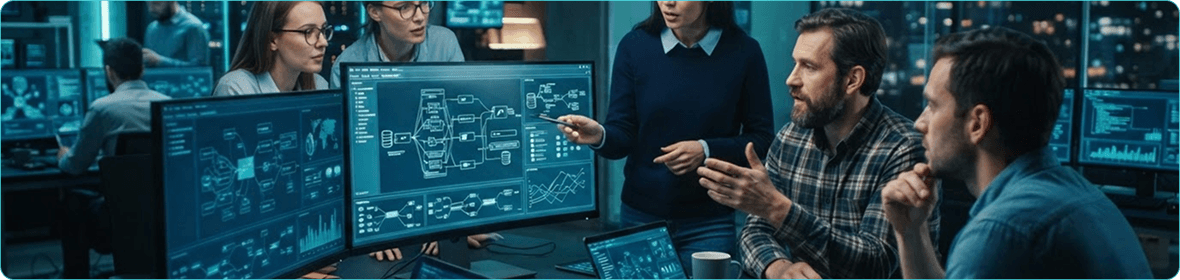
Operational handover
A project isn't done at go-live. It's done when it can be run, supported and changed.
Ownership
Business, technical and support owners identified.
Monitoring
Health and integration / workflow signals defined at the supported level.
Runbook
Known issues, restart / retry, containment, escalation and support routes.
Change model
Future changes, versioning, deprecation and approval paths.
Access review
Temporary migration access removed or re-scoped.
Documentation
Architecture and dependency records updated to current state.
Evidence
Cutover, validation, closure and residual risk evidence stored.
Review
Post-implementation review and next-wave decision.
| Signal | Owner | Stability criterion | State |
|---|---|---|---|
| Integration health | Operator A | No open critical issues | Met |
| Exception queue | Support B | Backlog cleared | Stabilizing |
Technology in practice
Proof appears only when approved for public use.

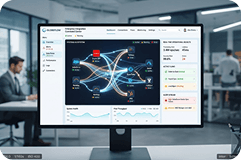
Modernization case study
Estate, constraint, chosen pattern, architecture, rollout, measurable result, customer approval.
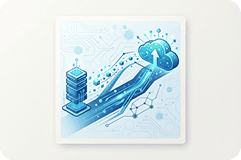
Integration case study
Systems, interface pattern, identity / data / control, operational result.
Migration note
Scope, wave, issue / rollback / correction, stabilized state, lesson.
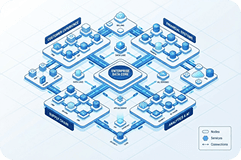
Reference architecture
Context, systems, interfaces, source of truth, workflow, observability, governance.
Where teams go next
Adjacent routes reuse shared foundations and reduce rework, without intrusive cross-sell.
Legacy integration foundation
Cloud & Developer Infrastructure, Identity & Access, Cybersecurity & Resilience.
Workflow modernization
Technology & SaaS, then AI & Agentic Automation where appropriate and governed.
Operational consolidation
Workforce & Productivity, or HR, Payroll & Revenue Operations, by business domain.
Regulated modernization
Regulatory & Compliance, AI Governance & Assurance, relevant industry solutions.
Developer / API modernization
Developer Platform, Integrations, relevant platform workloads.
Buyer questions, answered directly

Modernize the estate without losing control of the transition.
Talk with Zoiko Tech about the systems that must remain, the workflows that need to change, the interfaces and data that connect them, and the right phased path to modernize with less operational disruption.