Cloud & Developer Infrastructure
Build on foundations designed to scale with the systems around them.
Zoiko Tech brings APIs, SDKs, identity, integrations, developer services, observability, operational controls, and shared infrastructure patterns into a coherent foundation for organizations building, connecting, and operating digital systems.
Build, integrate and operate with explicit boundaries, observable state, and enterprise governance.
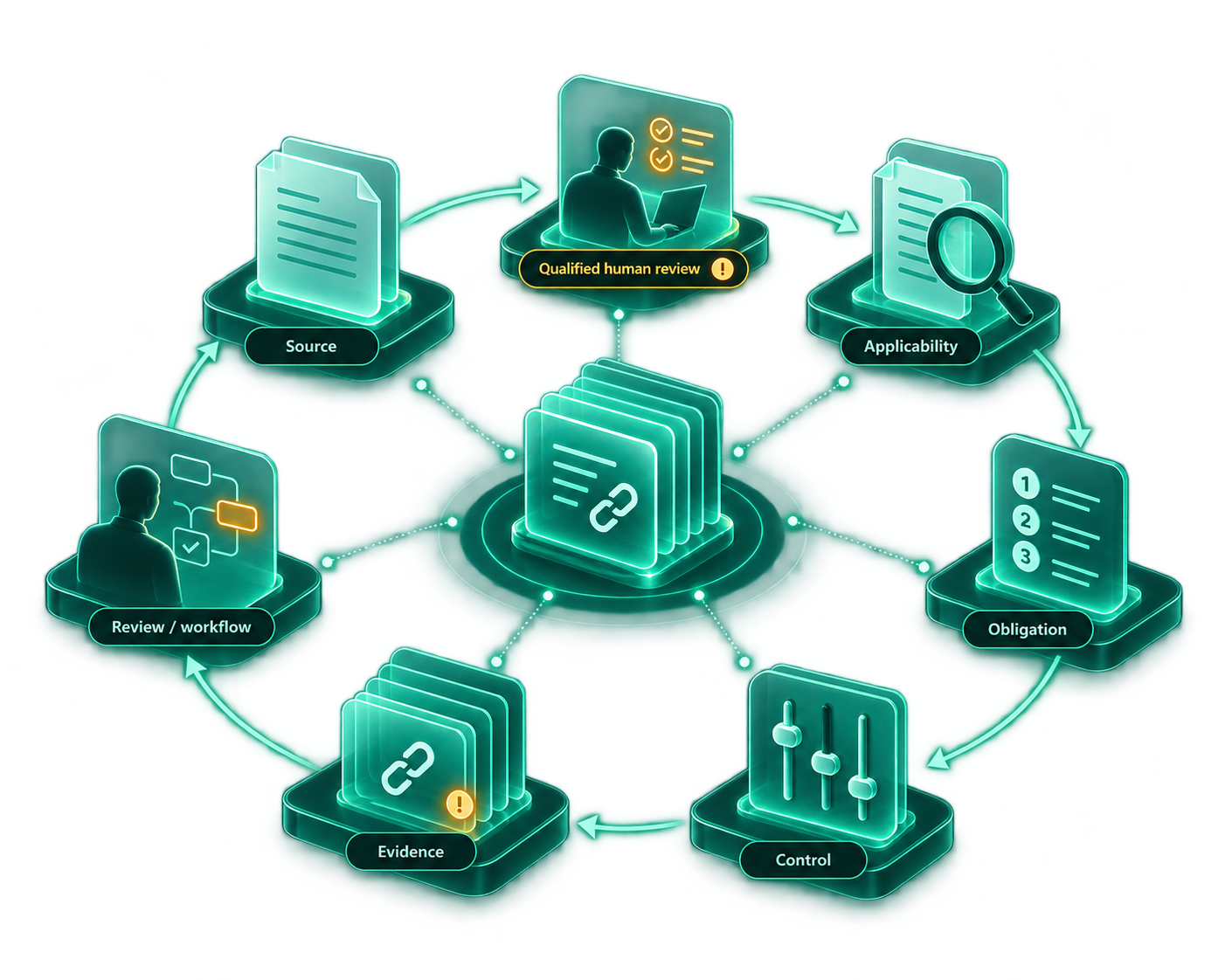
TECHNICAL INTENT ROUTER
Start with what you need to do.
Six paths, each leading to the section that answers it.

Build
Start with APIs, SDKs, authentication and reusable
platform interfaces.

Integrate
Connect applications, events, identity and workflows
across systems.

Learn
Find architecture guides, API reference, quickstarts
and technical documentation.

Test
Validate safely in available test or sandbox
environments.

Operate
Understand usage, observability, service status,
change and support.

Govern
Apply identity, access, evidence, security and
release controls.
WHY SHARED FOUNDATIONS
Infrastructure should reduce fragmentation, not reproduce it.
As organizations add APIs, SaaS platforms, AI services, integrations and data flows, they often duplicate identity, authentication, events, logging, operational tooling, governance and support paths. A shared platform foundation creates reusable patterns so teams can build faster without inventing the operating model again for every product.
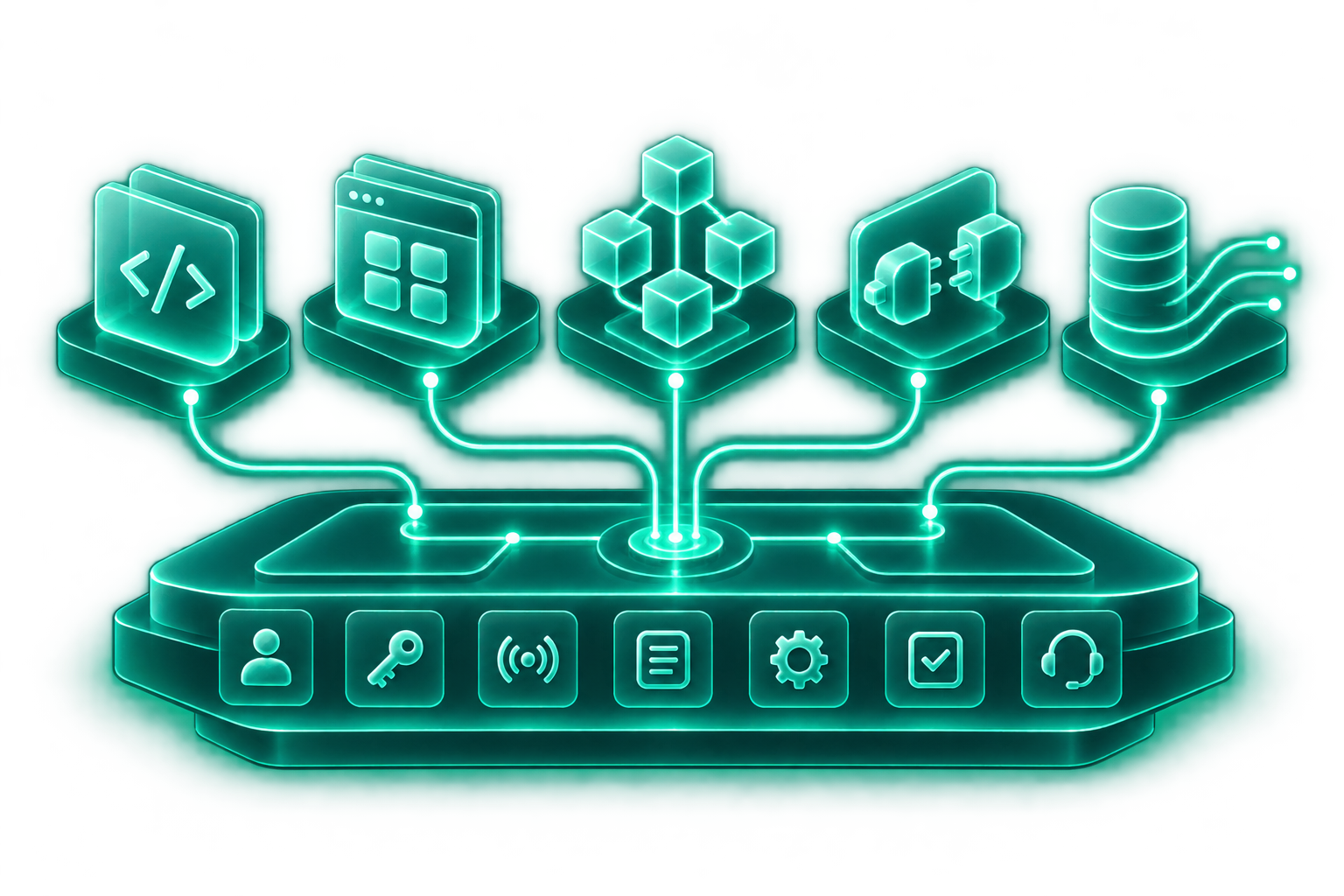
Proof principle: every named capability links to an approved technical destination or is labeled a future-ready design contract.
PLATFORM FOUNDATION ARCHITECTURE
Six layers, from developer entry to platform consumers.
Each layer answers one buyer question. Details appear only at the level approved in product records.
L1
Developer entry
APIs, SDKs, tooling where approved, model interfaces,
webhooks, authentication.
How do teams build?
L2
Integration
API contracts, events, webhooks, connectors, identity federation,
data exchange.
How do systems connect?
L3
Shared controls
Identity, security, policy, credentials, audit, evidence,
governance.
How is access and change controlled?
L4
Platform operations
Usage, observability, status, changelog, support, incident
communication.
How is it operated?
L5
Infrastructure foundation
Cloud and digital infrastructure, at approved specificity.
Where does it run?
L6
Platform consumers
Enterprise, financial, communications, AI, commerce and
industry platforms, as approved.
What can reuse the foundation?
Architecture truth rule: no public catalog of compute, storage, database, network, region or SLA products appears unless drawn from approved service records.
BUILD · APIS, SDKS & SERVICES
Developer entry points with clear contracts.
Each API or SDK card shows what it is, its status and where the authoritative reference lives.
Discover
Browse approved APIs, SDKs and model interfaces
by platform, capability, maturity and availability.
Start
Quickstart with prerequisites, auth, a first request
and a success check, where docs exist.
Handle failure
Error and status behavior, retry guidance and
idempotency safeguards.
Name
Canonical technical name
Purpose
One-sentence developer outcome
Status
Live / Preview / In development / Retired, per registry
Auth
Link to approved authentication method
Environment
Only confirmed availability
Version
Current public version, plus changelog and deprecation policy when they exist
Docs · Support
Reference, SDK docs, quickstart, developer support route and status link
INTEGRATE · APIS, EVENTS & IDENTITY
Six patterns for connecting systems.
Interfaces and protocols come from authoritative technical documentation, never invented here.
Request / response API
Synchronous integration. Shows auth, version, error
model and usage policy where approved.
Webhook
Outbound event notification with event type,
verification pattern and retry behavior when
documented.
Event-driven
Loose coupling with an event contract and delivery
semantics where supported.
Identity federation
Routes to approved identity and access
documentation. No invented protocol support.
Connector / app
Rendered from the integration registry with status,
owner, configuration and support.
File / batch exchange
Described as a pattern only if supported, not as
universal availability.
LEARN · DOCUMENTATION & ARCHITECTURE
A learning path that is more than marketing.
Documentation keeps persistent navigation, copyable code, visible version context and direct links to support and status.
Documentation home
Entry by platform, API, integration,
identity, operations and
troubleshooting.
API reference
Request, response and event
definitions where live.
Quickstarts & tutorials
Short path to a first outcome, then
multi-step guidance.
Architecture guides
Reference patterns, boundaries and
tradeoffs.
Sample apps
Only when maintained, versioned
and safe for external use.
Changelog
Dated changes to affected technical
surfaces where available.
TEST · ENVIRONMENTS & VALIDATION
Test only where testing is really available.
No dead “Try now” buttons. Each state sets clear expectations.
Create or open a sandbox only when external
access is live; explains isolation, limits and reset.
Routed through an enterprise or developer request
with clear expectations.
Labeled Preview, with what is and isn’t suitable for
production.
Points to documentation, a reference architecture or
Contact Sales.
Validation checklist
Least-privilege auth succeeds · success path is reproducible · error and retry behavior understood · limits known · events verified · logs available at the approved level · promotion follows change controls.
OPERATE · USAGE, OBSERVABILITY & STATUS
Operational maturity you can check.
Live status lives on the authoritative System Status page, never as hard-coded claims here.
Usage
Shown only where an approved
metering surface exists.
Observability
Logs, events, traces or signals at the
approved level.
Service status
Direct route to System Status.
Changelog
Dated product and API changes
where maintained.
Incident communication
Where service-impacting updates
are published.
Developer support
Routes by issue: docs, technical,
enterprise, status.
Change control
Version, deprecation and migration
notices for public interfaces.
GOVERN · IDENTITY, SECURITY & CHANGE
Controls throughout, not a late trust block.
Supported methods appear only where approved, with links to authoritative docs.
Authentication
Approved methods only.
Authorization
Role, scope and entitlement model
where supported.
Secrets
Never shown in UI examples;
scoped, managed credentials.
Environment separation
Development, test and production
boundaries where supported.
Audit / evidence
Configuration changes, access and
integration actions.
Release / change
Version, approval, rollout, rollback
and deprecation expectations.
Privacy / data
Purpose limitation, minimization,
sensitive-data handling, jurisdiction.
PLATFORM EVIDENCE LAYER
Platform evidence, within approved scope.
Each card shows maturity, operator and availability as recorded in the registry. Nothing is claimed beyond it.


LIVE
Infrastructure for Zoiko platforms and regulated workloads.
Per registry
Infrastructure
Explore


LIVE
APIs, SDKs, tooling and ecosystem services.
Not implying full self-service
Infrastructure
Explore

LIVE
Shared control, evidence and transaction infrastructure.
Shown only if customer-facing
Infrastructure
Explore

LIVE
Rendered from maintained integration records.
Live · setup · preview · planned
Infrastructure
Explore

LIVE
Links to the live surface instead of stating uptime.
Live link
Infrastructure
Explore

LIVE
Name · descriptor · maturity · operator · technical role · availability · docs link · Explore CTA. No unsupported region, uptime, SLA or customer claims.
Infrastructure
Explore
REFERENCE ARCHITECTURES
Reusable implementation patterns.
Conceptual patterns unless linked to an approved product reference architecture.
API-first application integration
Client
Auth
API interface
Service
Observability / audit
Event-driven workflow
Producer
Event / webhook
Consumers
Retry / failure path
Enterprise identity integration
Identity source
Federation layer
Platform / API access
Audit
Developer paved path
Template
Environment
Build / test
Review
Production
Observe
Multi-platform foundation
Shared identity
Integration
Observability
Governance
Many platforms
IMPLEMENTATION & ADOPTION
Six stages from discovery to reuse.
Each stage builds technical trust and lowers implementation risk.
Discover
Activity
Systems, teams, interfaces, data, identity, environments, constraints and outcomes.
Role
Qualifies the opportunity.
Architect
Activity
Target interfaces, integration patterns, access, observability, environments and governance.
Role
Builds technical trust.
Validate
Activity
Confirm interfaces and assumptions using docs or an approved test path.
Role
Reduces risk.
Implement
Activity
Integrate in controlled increments with ownership, versioning and support.
Role
Supports conversion.
Operate
Activity
Status, support, change, observability and governance processes.
Role
Supports retention.
Reuse / expand
Activity
Apply the same foundations to more workflows and platforms once value is proven.
Role
Supports expansion.
Technology in Practice
Evidence-first technical proof.
Only approved, attributable evidence appears here.
Architecture case study
Problem → systems → pattern →
controls → result → approval.
Developer adoption story
Task → friction → pattern → result,
only if evidence-approved.
Reliability proof
Context → issue → response →
result → current control.
Benchmark
Method → environment → metric →
limits → date → owner.
Evidence pending
No approved public infrastructure evidence is available yet.
See the architecture patterns, documentation and System Status, or talk to us.
Expansion & Retention
Reuse the foundation across more platforms.
Suggested paths follow what you already run and stay out of the way of active work.
Developer platform / API foundation
Modernization & Integration → Identity & Access →
Cybersecurity & Resilience.
Explore adjacent solutions →
Cloud / infrastructure adoption
Technology & SaaS → AI & Agentic Automation →
relevant platform workloads.
Explore adjacent solutions →
Integration layer
Communications & Collaboration → HR / Payroll /
Revenue Operations → industry solutions.
Explore adjacent solutions →
Identity / governance
Regulatory & Compliance → AI Governance &
Assurance → more APIs and workflows.
Explore adjacent solutions →
Observability / operations
System Status and support → broader platform
estate → cross-platform operating patterns.
Explore adjacent solutions →
Answer-First Technical Questions
Direct answers for technical evaluation.
An enterprise solution layer for building, integrating and operating on shared platform foundations: developer interfaces, identity, integrations, documentation, testing, observability and operational controls, at the level publicly approved.
Final Conversion
Build on a foundation designed to be reused, operated and governed.
Talk with Zoiko Tech about the systems you need to connect, the developer workflows you want to standardize, the operating controls you require, and the right technical path to evaluate fit.

Please don't include credentials, secrets or confidential system details.