01
Prospect / pre-service
Identify and qualify potential subscribers.
- Qualification
- Order intent
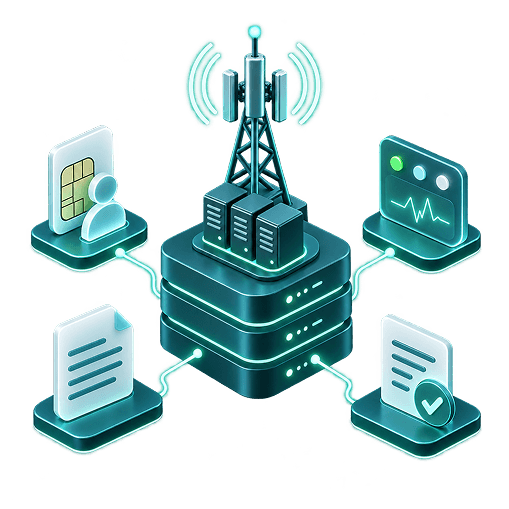
Zoiko Tech brings OSS/BSS, subscriber operations, communications infrastructure, monetization and integration into a governed operating architecture for telecom and MVNO environments — with explicit service state, ownership, observability and evidence.
Choose the closest intent and jump to the matching part of the operator model.

Connect and evolve subscriber, service and business operations without a risky all-at-once

Make service state, requests, exceptions and ownership easier to operate.

Create clearer commercial controls around offers, usage, billing and recurring service

Use approved number, calling, routing and communications infrastructure.

Standardize APIs, events, identity and partner integrations.

Surface service, integration, revenue-risk and exception states earlier.
Subscriber, service and billing states drift apart. Show the entity and state relationship, not isolated records.
Legacy OSS/BSS links grow. Shared APIs, events and integration patterns replace them.
Connect offer, service and monetization context without claiming a single universal engine.
External, wholesale and partner integration ownership and status become visible.
One cross-domain operator exception model.
A case, review and evidence pattern, without invented analytics.
Operational command, incident and change state made explicit.
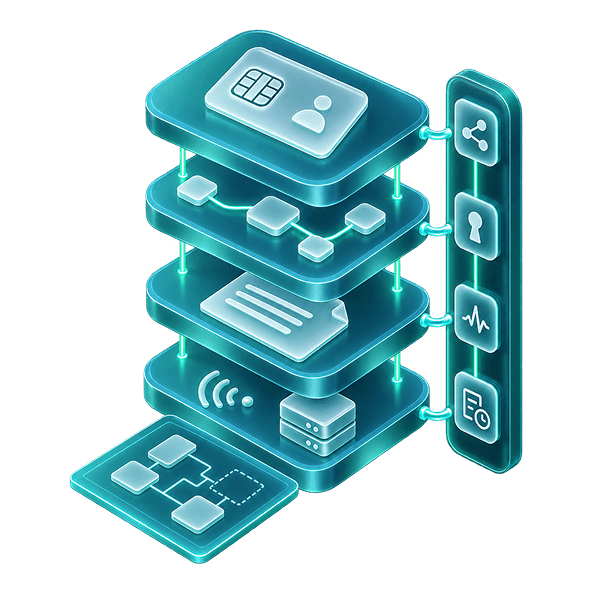
Seven layers from demand to shared foundations. Read from the bottom layer up, with the full text alternative below the diagram.
Subscriber operations are source-supported. This is a recommended state model, not exact product screens.
Identify and qualify potential subscribers.
Create, modify or cancel a request.
Check eligibility, data, configuration and policies.
Move from pending to active.
Active with entitlement and commercial context.
Make updates to the service.
Temporary change service state.
Close the service and complete remaining tasks.
A snapshot of how different services can be in different lifecycle states.
Service · Entitlement
New service
Plan change
Entitlement mismatch
Commercial design is kept distinct from charging and billing execution. Deeper mechanics are product-specific.
| Stage | Concept | Publication rule |
|---|---|---|
| Offer definition | Products, offers, bundles, commercial terms. | No live catalog engine implied unless approved. |
| Entitlement / service link | Connect what was sold to what is active. | Approved data model only. |
| Commercial event / usage | Recurring, one-time or usage-based event where supported. | No mediation or usage ingestion specifics without evidence. |
| Pricing / charging decision | Apply approved commercial logic. | Generic unless rating / charging is validated. |
| Billing / invoice outcome | Move approved billable results to billing operations. | Invoice and tax behavior is product-specific. |
| Exception / dispute | Mismatch, missing event, configuration issue, commercial exception. | Owner, evidence and resolution path. |
| Reconciliation / assurance | Compare expected and produced commercial outcome. | No revenue-assurance algorithms or savings metrics. |
| Input / status | Source | Period | State |
|---|---|---|---|
| Recurring commercial events | Service records | Period 1 | Accepted |
| Usage inputs | Pending source | Period 1 | Missing / Pending |
| Billing status | Billing operations | Period 1 | Billing review |
Zoiko Local is described as communications and local-number infrastructure covering local numbers, calling, video, routing and AI-powered customer communications.
Local-number infrastructure only within approved markets and regulatory scope.
Approved business or customer calling scope and availability.
A product capability only where validated.
Source-approved descriptor. No universal real-time claim.
Approved product behavior and responsible-AI boundaries only.
Connect communications events to subscriber, service and operational workflows where supported.
Partner integrations are part of telecom industry scope. Ecosystem handoffs are made visible without inventing wholesale, roaming or settlement products.

Partner, provider or integration owner, type and status.

API, event, file, webhook or other approved method.

Which subscriber, service or commercial workflow depends on the partner.

Healthy, degraded, unavailable, setup required, review required.

Who investigates when partner input is late, invalid or failed.

High-level only. Settlement and SLA data are evidence-gated.
Fraud is a source-supported telecom domain. Here it appears as a governed investigation pattern, not as detection algorithms.
Source, type, affected object, time. Confidence shown only if validated.
Operational priority, owner, current state, related events.
Service, account, commercial or integration context. No unnecessary personal data.
Review, request data, restrict, hold or escalate only if product workflows support it.
Confirmed issue, false positive, operational exception or unresolved.
Material decisions and changes preserved where required.
Current status with source and timestamp where supported.
Partner, API, event and downstream dependency status.
Linked to affected services without duplicating stale public status.
Scheduled, in progress, completed or failed, with ownership and evidence.
Cross-domain queue for service, subscriber, commercial, partner and risk issues.
Logs, events, metrics and traces at the level the product exposes. No fake NOC metrics.
Public availability belongs to the authoritative System Status.
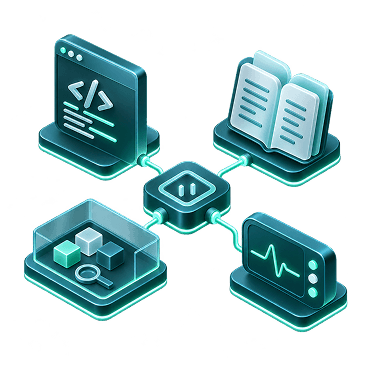
APIs, SDKs, model interfaces where approved, webhooks, authentication.
Documentation, API reference, quickstarts, tutorials, telecom architecture guides.
Sandbox, sample apps and reference implementations only where externally live.
Usage and metering where available, observability, status, changelog, developer support.
No protocol or connector claims without authoritative technical documentation.
Named platforms appear only within approved scope, maturity, operator and market records.

Telecom-grade OSS/BSS and operational infrastructure; telecom OSS/BSS, monetization and operator infrastructure.
Communications and local-number infrastructure: local numbers, calling, video, routing and AI-powered customer communications.
Additional delivery layers only from the platform registry and current product evidence.
Shared APIs, SDKs, tooling and ecosystem evidence when public-ready. Not a telecom product.
Legacy OSS/BSS doesn't have to go all at once. Six patterns, each with explicit ownership and source of truth.
| Pattern | When it fits | Required treatment |
|---|---|---|
| Wrap / coexist | Legacy OSS/BSS remains system of record for a bounded area. | Expose approved APIs and events around it; define ownership and source of truth. |
| Integrate | Multiple operator systems remain but need coordination. | Shared identity, APIs, events, observability and evidence. |
| Modernize a domain | Move a bounded subscriber, service, communications or monetization workflow. | Dependencies, acceptance, pilot and fallback. |
| Migrate in waves | Replace a component or workflow gradually. | Wave scope, state sync, validation, cutover and hypercare. |
| Consolidate | Reduce duplicated operator systems or interfaces. | Map capability, data, contracts, partner dependencies and retirement criteria. |
| Decommission | Retire a legacy component after downstream dependency closure. | Archive or retain required evidence; update operational routing. |
Operator type, markets, services, systems, workflows, partner dependencies, owners.
Current OSS/BSS, communications, monetization, identity, integrations, sources of truth.
Roles, change, evidence, security, risk / fraud review, market and regulatory boundaries.
Bounded workflows, integrations, exceptions, service state, rollback.
Limited subscriber, service or commercial scope with heightened monitoring.
Expand by market, service, offer or operational domain.
Incidents, exceptions, partner health, monetization outcomes, expansion.
Proof appears only when approved for public use.
Initial stack, operating problem, architecture and rollout, approved result.
Request or service problem, workflow and exception model, result.
Commercial process, controls and integration, outcome metric only if evidence exists.
Partner dependency, interface, status and exception model, operational outcome.
Subscriber, service, commercial and communications layers with APIs, identity, observability and governance.
Routes are contextual and never interrupt an incident, activation, fraud review or commercial exception.

Zoiko Local, Cloud & Developer Infrastructure, Modernization & Integration.

Communications & Collaboration, then relevant customer and commerce experiences.

Identity & Access, Cybersecurity & Resilience, Regulatory & Compliance.
HR, Payroll & Revenue Operations only for broader billing context, with telecom BSS boundaries kept explicit.
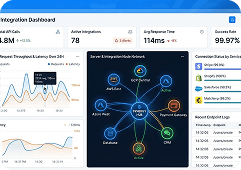
Developer Platform, Integrations, Technology & SaaS, Modernization & Integration.
It is a governed operational framework and platform suite designed for telecom operators to manage service state, subscriber workflows, monetization, and integration with explicit ownership and source-of-truth boundaries.

Talk with Zoiko Tech about your OSS/BSS estate, subscriber and service operations, communications infrastructure, monetization model, partner dependencies, and the right path to evaluate fit.